Even with Allegheny County moving forward with plans to slowly reopen, area universities are still trying to figure out what the fall semester will look like.
The transition to online education—and the short notice of moving in-person classes into a digital environment—wasn’t an easy one.
And fears of returning to online classrooms has some Duquesne University students thinking about the future.
Clinicals a missing link to education
Kirsa Danis is a nursing major at Duquesne.
And she is the first to admit she has not had much luck with her online nursing courses, prompting her to make difficult decisions about next semester.
“As a nursing major a lot of our learning happens through clinicals and having that hands-on experience,” Danis said. “It’s not beneficial for me to be learning all of this information but not being able to apply it.”
Danis said that if university officials decide to hold courses remotely in the fall, she will take the semester off.
Earlier this week, Duquesne President Ken Gormley issued a statement to students, faculty and staff, announcing intentions to return to campus in late August, barring a resurgence in COVID-19 cases.
According to Danis, the most difficult part of her remote learning is her clinical requirement. Nursing students do clinical hours in area hospitals to help them actively apply what they learn in the classroom.
Since classes moved online, students must do assignments in place of those clinical hours.
“Their way of doing clinical online is giving makeup assignments that equate to eight hours of work,” Danis said.
She said these assignments were not comparable to the hands-on experiences that students receive through normal clinical hours.
“This past month, doing clinical online has not really taught me anything. I just fine-tuned information, like learning how to assign a plan of care to a patient,” Danis said.
While Danis said she would prefer to continue her education and graduate as planned, she knows that it will be more beneficial to wait until she can have the clinical experience again.
“It’s (taking a semester off) awful but needed if you want to learn more. I know we can’t blame Duquesne, but it’s still annoying,” Danis said.
Remote learning pushes research in new direction
Lauren Rebel, meanwhile, is taking a different approach to her plan for fall.
“Even though it will be really hard for me to take the classes I am planning to take next semester online, I haven’t really considered taking the semester off,” said Rebel, a biology major.
Rebel said she made this decision based on her future plans and the demanding educational path she finds herself on.
“I want to go to graduate school, so I am on more of a strict schedule in terms of timing,” Rebel said.
Rebel said she does not have many complaints as far as her online classes are concerned, although she admits lectures were much better in person.
At this point, her biggest issue with remote learning has been that she cannot work on her research, which counts for credits. Unable to work in the campus laboratories, she said she has been forced to change her course of action.
“I had to switch to mostly gathering information from previously published papers online to work on a review rather than furthering my own research which was frustrating and disappointing considering how hard I had been working on it up to that point,” Rebel said.
Aside from her research taking a different path, Rebel said she remains optimistic about the situation.
“It is none of our faults, we just need to get through it!” Rebel said.
Stressed over learning without application
Emily Dalzell, an early childhood education major, would like to take the semester off but does not think that is plausible.
Dalzell recently changed from a biology major to education, meaning she is behind on courses from other education majors in her year.
“If I started out as an education major and wasn’t behind, I probably would take the next semester off,” Dalzell said.
Another factor that kept Dalzell from making the decision was the start of her focus semester.
“Focus semesters are pretty huge since they are nine credits, plus (there is) a field each semester. I really wouldn’t want to have to learn all of that online, plus miss the field,” Dalzell said.
Field is comparable to clinical hours; students observe classes at schools to apply what they have learned in lectures and readings.
Just as Danis is uncomfortable missing her clinical hours, Dalzell said she does not like the idea of missing more field hours. The Pennsylvania Department of Education allowed all university students to not complete their hours this spring because most schools closed in March.
“We’re all stressed over the idea of having to learn to teach without actually being able to see and experience it,” Dalzell said.
With nearly every aspect of life changing drastically due to the coronavirus pandemic, stress levels have been increasing and therapists are left working to help their clients cope while trying to adjust themselves.
Krista Everett, an individual mental health therapist at Community Psychological Resources in Norfolk, Virginia, has been dealing with this struggle.
Everett, who works mostly with children and adolescents, said moving the practice online didn’t happen overnight.
“At first, we had the option to do teletherapy (online therapy) or still go to the office to see clients in person,” Everett said.
Then, the office closed to in-person sessions on April 6.
Like many other businesses, Everett’s office has turned to Zoom to hold sessions with their clients. But she said teletherapy comes with a few uncertainties when it comes to clients’ rights.
Medical clients are protected under the Health Insurance Portability and Accountability Act, or HIPAA. With online video chatting sessions, she said, it is important that these rights are still protected.
Everett said her office is using the HIPAA-compliant version of Zoom, which according to the company website applies account settings that protects customers and their personal health information. Zoom also encrypts all audio, video and screen-sharing data.
For clients who do not have internet access or have frequent technological issues, Everett said that many insurances have been covering therapy over the phone, as well.
For many, access to therapists via the telephone has been helpful.
“I have found that talking to a therapist over the phone has really helped,” said Alex Pompe, a student at Duquesne University, who took the spring semester off from classwork due to personal anxiety and depression — well before the coronavirus prompted university classes to move online.
Alex Pompe, a student at Duquesne University, has turned to telephone therapy sessions to help him talk through anxiety brought on by the uncertainties of COVID-19. (Photo courtesy of Alex Pompe)
“I know that I am not alone in feeling this way, and this virus is only temporary,” Pompe added.
That said, he added that being under quarantine has drastically affected his life. As someone who already struggles with anxiety, he said these sudden changes due to social distancing do not sit well with his mental state.
“It’s hard being isolated from your support systems (friends, family). I have recently lost my job, my parents’ hours have been cut, and the situation has been extremely stressful,” Pompe said.
Meanwhile, for therapists, the shift online has been just as challenging.
“It’s . . . difficult to keep younger children engaged when it’s not in person. I’ve had to find creative ways to do play therapy techniques without being in the same room,” Everett said.
And while it may seem like mostly adults are dealing with the effects of the pandemic, Everett said that children are not blissfully unaware of the state of the world.
“I’d say the majority of children know what is happening, to the extent that they can comprehend,” Everett said.
Everett said she has noticed that one of the most difficult parts of the “new normal” for children is the lack of social interaction with people their own age.
On top of the drastic change in their lives and the lack of social interaction, children are also dealing with their own stress.
“I’ve noticed more stress due to uncertainty and worries about the virus impacting family members,” Everett said.
She noted that children show stress differently than adults, often by acting out – from temper tantrums and attention-seeking to impulsivity and trouble focusing.
Having school at home is also a new challenge that children are facing. Everett said she has noticed that among her clients, most enjoy doing their work at home because it seems less “demanding” than in the classroom. However, missing the social interactions and routines remain difficult.
As advice to parents, Everett suggested parents watch their child’s behavior closely and try to notice any changes. Along with that, parents should try to maintain a daily routine for their child.
“Allow kids to contact friends/family through other means such as video chat. Help kids find ways to process their feelings such as drawing, playing, writing,” Everett added.
Another important factor for children is physical activity. Everett said parents should keep their child active which can also help with behavioral issues.
Overall, she noted that this time has been very stressful for everyone – adults and children alike.
“Now is the time to seek out support systems and be gentle with yourselves and each other,” she said.
Noah, left, and Hailey Fryer, center, join their grandmother, Annette Smith, right, in visiting their great-grandmother, Gloria Anguilo, who is a resident at the Orchards of Saxonburg, a skilled nursing home facility in Butler County, Pennsylvania. When the Fryers learned that Anguilo enjoyed window visits with their family dog, Ellie, they started bringing the pup along.
One Saxonburg family finds a way to visit grandmother in area nursing home
BY NICOLETTA VENEZIANO
Before COVID-19 changed her routine, Annette Smith, of Saxonburg, Pennsylvania, would take lunch and dinner to her elderly mother every day.
Smith’s mother, Gloria Anguilo, is a resident at the Orchards of Saxonburg, a skilled nursing home that specializes in personal care, physical and occupational therapy.
“The nurses are always so welcoming — they know me and my daughter by name. We’re extremely lucky to have her surrounded by such great people,” said Smith.
However, those daily lunch and dinner deliveries came to a halt when Gov. Tom Wolf announced that all nursing homes in the state should ban visitors due to the coronavirus.
Annette Smith, left, and her daughter, Gloria Fryer, can no longer visit their family matriarch, Gloria Anguilo, who is a resident of the Orchards of Saxonburg in western Pennsylvania. Since COVID-19, they have been unable to physically visit Anguilo in person or deliver home-cooked meals. (Photo courtesy of Annette Smith.)
Smith and her daughter, Gloria Fryer, said they struggled with new visitation rule.
“It’s especially challenging because I used to be there every single day,” Smith said. “She loved the company. And now it’s just hard for us to let her know that everything is OK.”
The family felt like they were kicked in the gut when Anguilo sparked a fever of 99 degrees during the first week of April.
The family matriarch was tested for COVID-19 and immediately put into isolation until results came back. This caused even more stress on Smith and her family because of the “unknowingness of what could happen,” according to Smith.
This isolation also caused Anguilo to be completely separated from all other residents, leaving her with very little human contact.
The family was relieved when the test results came back negative for COVID-19.
“It especially breaks my heart because she has no idea why this is happening. No matter who explains the situation to her, she doesn’t understand why we can’t go see her,” Fryer said.
Amid all this hardship, the family realized that Anguilo was going to be in isolation for her 90th birthday.
So they got creative in celebrating.
“My daughter, grandchildren, and some other family members decided to decorate her window at the facility with balloons and streamers,” Smith said.
Smith even appealed to family and friends on Facebook to send Anguilo 90th birthday cards. This overwhelming gesture of love got Anguilo flowers, fruit baskets, and some 75 birthday cards.
Fryer said she asked her grandmother’s nurses what her favorite part of the birthday surprise was. The nurses responded quickly: Anguilo loved seeing Fryer’s wheaton terrier, Ellie, the most.
“It was funny to hear that her favorite part of the day was us bringing the dog to the window. Now I know to always bring her in the future,” Fryer said. “The kids want to continue to bring her different signs and paintings that they make. We want her to know that we’re always thinking of her.”
With this unforeseen pandemic, the family said they will continue to visit Anguilo through the window of her facility. “We owe it all to the nurses. They have been so understanding and kind during these hard times,” Smith said, “We just hope and pray that everything stays steady within the next few
On Friday, May 1, Gov. Tom Wolf and Pa. Health Secretary Dr. Rachel Levine announced that southwestern Pennsylvania would not be included in the state’s initial reopening transition from a “red” to a “yellow” phase. This transition would allow certain businesses to re-open and bring a return to normalcy for the area.
With continuing orders for essential businesses to operate in the safest manner possible, and numerous churches, schools and non-essential businesses remaining closed, local establishments are developing creative ways to continue to serve the public.
John and Donna Sembower have found themselves sheltering-in-place since March as a result of the coronavirus and fears that their age and preexisting health issues might put them at greater risk. (Photo courtesy of Allison Family)
BY BRIANNA ALLISON
I had no idea that the last time I would spend time and hug my grandparents would be when I said goodbye to them on New Year’s Day.
With the busyness of the semester, my only communication with my grandma and pap was over FaceTime. Now due to the COVID-19 pandemic, nothing has changed.
My aunts, uncles, and parents decided that it was in our grandparents’ best interest to not see them as soon as the coronavirus started to spread, especially since they were in an age demographic getting hit hard.
Plus, my pap has a lot of health risks such as heart disease, a blood disorder and diabetes. The fact that he recently had pneumonia only made him a higher-risk victim.
But the worst disease Pap has is dementia.
Some days he is really worried about the health of our family and keeping our family businesses running. The next, he is angry that none of us are visiting him.
Brianna Allison, center, with her grandparents, John and Donna Sembower, during happier times.
My grandma gently reminds him of the pandemic and he says he understands. But hours later, he asks her if they can go out to dinner.
He can’t remember what’s happening in the outside world.
The hardest part about not seeing him during this pandemic is that his memory of me and my family members are slowly deteriorating as each day goes by.
My grandma, Donna Sembower, believes that the visits, 6 feet apart in their garage, and talks on FaceTime are helping him retain those memories of us. However, she can also see that Pap is depressed —making each day with his fading memory a challenge.
My mom, Terri Allison, said it’s obvious that Pap is having a hard time with his illness during COVID-19, but my grandma is struggling just as much with Pap’s dementia.
“None of us can help her or give her a break from the everyday struggles with my dad,” my mom said. “One day, my dad decided he was going outside to clean up his neighbor’s yard. He fell and broke four ribs. My mom had to call an ambulance to take him to the hospital herself because we didn’t want to be around them.”
His injuries made him even more immobile, but my grandma claims his resting didn’t last very long because he couldn’t sit still.
“He keeps himself busy by doing laundry, playing cards, and watching TV,” my grandma said. “I try not to put the news on around him though because he gets worse. We watch a lot of Christian programming which is a big help for both of us.”
Grandma says she relies on her strong faith to help her with Pap every day. She’s always reminding each one of us that God has a plan.
Seeing my pap like this is hard because sitting around and doing nothing is not him.
For as long as I can remember, Pap was constantly busy.
He was either running both of his businesses, working on projects at the properties he owns or helping anyone that needed him.
Now, due to his dementia, he can’t drive. And COVID-19 is forcing him to stay at home all day, filling the silence with stories from his past.
He talks about his dad. His childhood. Old job sites that he worked on.
Sometimes, he even talks about a car that was totaled in an accident four years ago.
But he can’t remember what’s happening right now.
On May 23, he will turn 80 years old.
The Sembower family has started to gather every Christmas time at a local restaurant to celebrate the holidays together. This year, they were unable to gather for Easter much like families across the country, due to COVID-19. (Photo courtesy of Brianna Allison)
As his birthday approaches, our family is getting more and more concerned about the time we have left with him before his knowledge of us slips away.
“My dad’s memory is fading fast and we are losing valuable time with him and my mom,” my mom said. “My fear is even after May 8, or whatever date the governor chooses, we still will not safely be able to spend time with my parents. When the time comes and it is considered ‘safe’, it may be too late. We will never get back the time we have lost with them.”
At the start of the pandemic, my family’s only concern was my pap getting infected by the virus, but now we are realizing that even safe in his own home, this virus is still taking him from us.
For now, my family continues to remind Pap how much each one of us loves him from the socially safe distance of 6 feet away in the garage.
But we’re really just longing for a hug from him one more time.
In wake of COVID-19, students reflect on how colleges handled move to remote teaching
BY ASHLEY NEWMAN
Many U.S. colleges and universities are wrapping up coursework and final exams this month while also trying to master the unprecedented task of holding commencement ceremonies through video chats.
These universities have had plenty of practice working through programs like Zoom since most college students were asked to leave campuses in March as a result of COVID-19 and have been online since then.
From small, private schools to large, public universities, higher education officials have taken different approaches to dealing with the pandemic.
Isabel Papariella is a political science major at Seton Hill University in Greensburg, Pennsylvania.
Isabel Papariella is a political science major at Seton Hill University.
She said Seton Hill emailed their students on Thursday, March 12, to say that classes were canceled until Wednesday, and coursework would be online for two weeks. But by the following Monday, they were told they had a week to leave campus for the rest of the semester.
“I think they did the best with what they could do, but I think they should’ve given us more than four days to move out,” Papariella said.
As far as classes go, Papariella said she finds that it all depends on the course and the professor.
“Some classes are normal, some give so much busy work and some just seem like more work (now that they’re online),” Papariella said.
Since there is no separation between “class time” and “homework time,” Papariella said that even classes that are not giving more work seem busier because listening to lectures and doing homework are all done in the same place.
Seton Hill students are currently finishing final examinations, which end today (May 8).
According to Papriella, some accommodations have been made.
The school is offering students to choose a pass/fail option over a normal letter grade for each class, though the president of the university has advised students against that.
Seton Hill is an Apple-certified school, which means all students are given a laptop that is included in their tuition. Because of this, according to Papariella, the president, Mary C. Finger, told students that they had a greater advantage over schools that do not provide technology to students. Because of this advantage, Finger urged students to not take the pass/fail option.
Another accommodation offered to students was a 40% refund for room and board. Papariella said that students were told the refund would appear in their tuition balance to be used for their next semester. However, Papariella said she has not seen this refund yet.
Jamar Lee, a music performance/ instrumental track major at Youngstown State University, also has not seen the refund that he was hoping for.
According to Lee, any scholarships awarded to students were not refunded.
Jamar Lee is a music performance/instrumental major at Youngstown State University.
“That didn’t sit well with me. Students have to put a lot of work (into scholarships), whether it be essays, letters of recommendation, volunteer hours and/or participation in organizations to receive them,” Lee said.
However, all out of pocket expenses were refunded. According to Lee, students received a 50% refund for room and board and an 18% refund for general fees.
Although Lee disagreed with the refund policy, he felt that Youngstown handled other aspects of the pandemic well.
Youngstown did not offer a pass/fail option for their students, but they extended the period to withdraw from a class and take an “incomplete.” The university concludes its semester Saturday (May 9).
Lee said he found that his professors have handled the situation very well.
“For me personally, my music school teachers have been really accommodating to our work load. They were very understanding and tried to be flexible,” Lee said. “However, friends in other colleges of the school did not have similar stories.”
Lee also praised the school for setting up an emergency fund for students in need and allowing students to remain on campus if they did not have a safe place to go.
According to Lee, the emergency fund was funded by alumni, faculty, parents, students and friends of the university.
All students had to do was fill out an application to prove that they were struggling financially and they could be awarded between $50 and $250 based on their need, Lee said.
Youngstown also extended its spring break by a week before moving classes online, which allowed students to move out during the extended break.
“We were given a five-day slot to move out of the residence halls with specific time slots to prevent no more than five people in the building,” Lee said.
Lee believes that this was a good way to handle move-out considering it was organized and followed social distancing orders.
“For the most part, I thought their response was pretty good aside from the handling of the refunds,” Lee said.
Erica Pierce, a health policy and administration major at Pennsylvania State University, did not have as much luck with her move-out experience.
Erica Pierce is a health policy and administration major at Pennsylvania State University.
Penn State was also on spring break when the administration announced that classes would be moved online for the rest of the semester.
According to Pierce, two weeks later, Penn State allowed students to get “essentials,” like books and notebooks from campus. She said students were given 30 minutes to gather all essential items from their dorms. The rest of their possessions are still there.
“We haven’t gotten a word about the rest of our belongings yet so it’s still just up (in the air),” Pierce said.
While Pierce would like to retrieve her items, she said she understands that trying to move out so many students would be hectic.
Aside from the confusion about moving out officially, Pierce believes that Penn State has handled the pandemic fairly well.
“We have pass/fail options for grades. Some professors have made adjustments with presentations and projects,” Pierce said.
Pierce said her schedule has been easy to maintain since not much has changed since coming home. The university is currently wrapping up its final exams, which conclude today (May 8).
Juliette Gough, a sophomore at George Mason University, does not agree that online classes have been similar to regular classes.
“(There is) definitely more (work), and lots of my friends and classmates agree,” Gough said.
Aside from the workload, Gough said that her classes have been fine. Her main issues have been focusing in “class” and managing her time.
Gough said she feels like her professors have been understanding during the pandemic.
“My one professor sent the nicest email when everything first happened,” Gough said. “Some of them have been acting like not much has changed now that we’ve gotten into the groove of online classes, but nothing unreasonable.”
Like many other schools, George Mason is offering their students the pass/fail option.
Overall, Gough feels that George Mason handled the situation well. When a student was suspected of having COVID-19 months ago, the university sent regular emails updating the university community on the student’s situation and eventually their negative test result.
Like Penn State, students have still not officially moved out. After online classes were announced, their spring break was extended for a week. The university’s final exams week is scheduled to begin May 13.
“People were allowed to apply to stay on campus in case they have bad internet, an unsafe home life or are from abroad,” Gough said.
The buildings opened for the week of March 18, allowing students to get anything they left over break, but they were told that they would have an official move-out scheduled in the future.
Later, students were given the option to move out themselves with one other person between June 10 and June 30 or have everything packed by a moving company.
Although many do not live on their campuses, graduate students were also affected by the change in structure.
Madeleine Bartrug, a first-year physician assistant (P.A.) student at Chatham University, said that her schedule was not moved immediately online.
After an email was sent out by the university’s president stating that classes were to be online, Bartrug’s program director emailed the P.A. students to tell them that due to the small size of the groups, they were still able to meet with their problem-based learning (PBL) groups.
After about a week of their normal PBL schedule and other classes online, Bartrug said that their PBL was also pushed online.
Bartrug said that most of their classes transferred to pre-recorded lectures that could be done asynchronously, while her PBL group met weekly on Zoom.
“Once we got used to it, PBL was pretty similar. We were able to be interactive, which was a benefit,” Bartrug said.
While PBL did not change much, Bartrug admitted that the other courses were harder to juggle.
“I (had a harder time learning) because my structure was off,” Bartrug said.
Like many other students, Bartrug felt that she was being assigned more work than usual and that it was difficult to keep up with expectations.
The students were not given a break before online classes began because their program was ready for the material to be moved online.
“There was always talk of going online (when this was just starting), but we never knew when,” Bartrug said.
Along with classes, P.A. students are also expected to log hours in clinical rotations.
Although the semester concluded on April 23, Bartrug and her peers were set to start clinical rotations in an area hospital at the beginning of June. Their first rotation has since been canceled.
Bartrug said they do not have to make up that rotation, and as of right now, the students are still set to graduate on time.
“(I think it’s bad that) we don’t have to make it up because we don’t get that experience,” Bartrug said.
No accommodations have been made for the students (P.A. students are already on a pass/fail system), but Bartrug said that the professors have been considerate and understanding during this time.
Overall, Bartrug is pleased that Chatham managed to not push their graduation date back. She believes that the university handled the situation fairly well, but still had a difficult time with the transition.
“We were frustrated (when we moved online) because we were trying to process everything in the world while continuing on with classes like we normally would,” Bartrug said. “It’s harder in the sense that you’re just staring at a computer and that can be tiring, versus someone in real life teaching you.”
How Pittsburgh area families are dealing with at-home education
BY PAUL MARTORELLI
The global pandemic has changed the lives of nearly every person on the planet. Families with children in kindergarten through 12th grade have seen some of the most drastic changes to daily life since the novel coronavirus prompted everyone to shelter-in-place.
With children having to spend the extra six hours at home, parents like Melissa Smith, the mother of a fourth-grader and a seventh-grader, are learning to adapt on the fly.
“It’s very stressful,” Smith said. “I’m very fortunate though, I’m used to working from home so I can put a client on hold to tell the kids to have lunch or do their schoolwork.”
Smith has a degree in secondary education but has not worked as a teacher.
Yet, even with the degree, she said she is having some difficulty in making sure that her children are up to date on their classwork.
“I definitely learned math a way different way,” she said.
She’s also learned the value of daily structure during the week.
“I try to wake the kids up at the same time in the morning, as if they had to catch the bus,” Smith explained. “Obviously we don’t rush like we used to, but we keep the sequence. Do schoolwork until you’re done, have breaks for lunch. I do make sure that they get an hour of activity outside of doing schoolwork. Go outside, ride your bike, that sort of thing.”
“I definitely learned math a way different way.”
— Melissa Smith
Pittsburgh mother of two
Heather Star-Fielder, a professor at Point Park University, has two children, one in the seventh grade and the other a freshman in high school. She said she has taken this experience as a learning opportunity.
“Watching my children do online learning has actually informed my practice teaching my college students,” she said. “I see that sometimes my kids have trouble logging in, trouble with Wi-Fi and trouble submitting assignments. If we’re struggling with basic technology, even with my experience as an educator, I’m sure they (my students) are too.”
Both parents said they are having different experiences with the help they are being provided from their children’s schools.
“The teachers are very much doing the schooling,” said Star-Fielder. “They work on lesson plans, grading and engaging with their students. It’s simply my job as a parent to guide my children into good soft skills and life habits.”
However, Smith said she has found the experience of keeping up with her children’s school confusing.
“The teachers are using different methods. Different classes go to different websites for info, it is very hard to keep track. I wish it would be more consistent,” she said.
For example, Smith said that her children’s teachers email assignments and are there to talk via email if needed.
But her fourth grader is mainly doing Zoom meetings, while her seventh grader is given pre-recorded videos and some sessions on Google Hangouts for instruction.
Both parents said they have found solace in talking to other parents in their school systems.
“Everyone is feeling the same,” said Star-Fiedler. “We’re all extremely grateful to the teachers who have put so much work into these online lessons. But we are also sometimes confused and frustrated at our own lack of knowledge or technology.
“I’ve heard parents of younger, elementary-aged students are having a harder time because those children often cannot do the work independently, so it makes it very difficult for them to work at their own jobs during the school day.”
Donna Jean Roberts was pleasantly surprised when Congress quickly passed a $2.2 trillion stimulus package to help Americans impacted by sudden financial changes due to COVID-19.
But now the junior at Duquesne University is mostly confused about why some Americans are being left out of the Coronavirus Aid, Relief, and Economic Security (CARES) Act — a stimulus package that provides up to $1,200 and an additional $500 for every child under 16 based on 2018-2019 tax reforms to select taxpayers.
Under the CARES Act, however, anyone over the age of 17 who is claimed as a dependent by their parent or guardian will not receive a stimulus check. Additionally, the parents of college-aged students will not receive the extra $500 per child, since that credit only applies to children who are 16 years old and younger.
“I don’t understand why the government would purposely exclude a group of people from money that is supposed to help everyone,” Roberts said. “The age of the kids shouldn’t matter.”
Many students, like Roberts, were quick to voice how unfair they believed their exclusion from the stimulus checks were.
Roberts noted that she—along with other college-aged students—have lost employment due to non-essential businesses closing and have financial responsibilities.
Similarly, the parents of these students are just as frustrated.
Jen Malcolm, a mother of 20-year-old twins, said she feels that her children’s ineligibility from receiving stimulus checks is unjust.
“I think it’s completely inequitable,” Malcolm said. “The implication that my kids’ care somehow cost me less than it did when they were 15 is completely illogical.”
In some cases, parents of college students need financial assistance now more than ever, especially with the financial burdens of student loans and increasingly high tuition costs on top of work furloughs or layoffs.
But not everyone feels this way.
Justin Sembower, a junior at Pennsylvania State University, is content with not receiving a stimulus payment.
“Being a college student, I’m still going through classes, and I’m not really working,” Sembower said. “I would rather the checks go to someone who got laid off and is the provider of his or her family, rather than to a 21-year-old college student.”
He noted that some college students are not as impacted by the financial consequences of the pandemic. Their primary concern is just successfully completing their semester from home.
Although the first round of stimulus checks have already been released to some 80 million Americans, taxpayers who have not received their payments yet should be on the lookout for them in the next few months, as some relief will come in the form of paper checks.
Meanwhile, as the American economy continues to stumble, lawmakers continue to respond to the ongoing crisis with additional stimulus assistance.
One of the latest proposals, the Emergency Money for the People Act, co-sponsored by U.S. Reps., Tim Ryan, D-Ohio, and Ro Khanna, D-Calif., would expand the one-time stimulus checks. This package, which is currently before Congress, would provide Americans over the age of 16 up to $2,000 a month for up to 12 months to relieve the financial strain due to the pandemic.
Although times are uncertain, Sembower said he is certain America will continue to persevere.
“The government is trying to help keep families and businesses afloat during the uncharted waters we’re currently sailing through,” Sembower said. “I think it (the stimulus payments) will really help to mitigate the negative effects that COVID-19 is sure to have towards the economic recession.”
Washington, Pa. grocer, meat packing officials frets about challenges of food supply, demands during COVID-19 pandemic
BY MARK FRAZEE
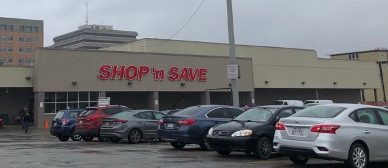
WASHINGTON, Pa. — As the co-owner of several local independent grocery stores, Jeff Duritza has seen first-hand the sudden ebb and flow when it comes to supplying public demands with basic necessities during a pandemic.
The Washington, Pa., Shop ‘n Save is one of several grocery stores co-owned by Jeff Duritza in this April 24, 2020 photo. Since COVID-19 broke out, Duritza said business has been steady despite challenges to keeping shelves stocked. (Photo by Mark Frazee)
From increased demand to decreased supply, Duritza along with other members of the supermarket supply chain in Western Pennsylvania and beyond have had to adapt to the changing global situation as a result of COVID-19, while at the same time ensuring the safety of both customers and employees.
“Any cleaning product — soap, sanitizers, laundry detergent — have all been very difficult to come by,” Duritza said, who co-owns several Shop ‘n Save and Foodland stores across the region. “(It was hard to get) frozen foods — the proteins, such as Tyson frozen chicken, bread dough — as well as regular bread from the vendors. That first week and a half, we were out of bread and milk every day.”
Duritza said that bread and milk supplies have mostly returned to normal, so while his stores are still selling more of these items, they’re better able to keep the shelves stocked.
As for toilet paper and paper products, Duritza said he has tried to get creative in keeping an adequate supply on his shelves, including ordering from different brands outside of his regular suppliers.
But despite this proactive measure, he said he still has not received a notification when these orders will be delivered.
Other vendors, such as the Coca-Cola Co., have reduced their portfolio to focus on core brands, while excluding some of their less popular offerings, such as diet root beer.
Duritza said there have not been any major disruptions there, however, because Coca-Cola is still manufacturing roughly 80 percent of their products.
He has also been keeping a close eye on trends in his stores between various departments. Sales in the “add-on” departments such as deli, bakery and floral have been lower. Duritza said he believes customers have been focusing on “the essentials” while shopping.
And while some items have been fine — such as lunchmeat and cheeses —others have been difficult to keep stocked, such as peanut butter, jelly, pastas and sauces.
According to Jeff Duritza, the co-owner of several grocery stores in Washington, Pa., food orders sit at about 50 percent, dairy between 65 and 70 percent, and frozen nearly 85 percent. He worries about breaks in the supply chain moving forward.
In other areas, Duritza said customers and grocery chains may not have seen the worst of supply issues just yet. One of these areas is canned vegetables.
“Canned vegetables have been bad. Typically, when they harvest (the vegetables), they’ll pack them,” Duritza explained. “Going into the summer, before they pack, you probably won’t even be able to find a canned vegetable in the store, because they pack them once a year and keep them in warehouses.”
But perhaps the largest area of worry for Duritza is meeting demands in the meat department.
The COVID-19 pandemic has forced some major meat packing plants to temporarily cease operations, including those operated by meat producers Smithfield Foods and Tyson Foods.
“We’re hoping to see a little bit of price drops, but now they’re closing some plants, so that’s going to put more pressure that it may go the other way. We’ll see what happens over the next few weeks,” Duritza said.
Brian Weiss knows these challenges all too well. He is the treasurer of the local Albert’s Meat Packing Co.
“The influx of business at the supermarket put stress on the supply chain, (especially) the market fluctuations of the materials going up in price, and then down in price, and then back up in price. It’s all supply and demand related,” Weiss said.
Weiss said the nature of the demand for meat products has also changed. While packing plants have lost a lot of business from restaurants forced to close as a result of the pandemic, more people are cooking at home, so the demand at supermarkets has increased.
What has resulted was a redistribution of supplies — something that has helped grocery store operators such as Duritza.
“A lot of folks are eating at home. Everybody’s cooking, and our sales have been good because of that,” Duritza said.
While Weiss said he believes that increased demand and less supply of meat products will likely result in higher prices, he does not believe U.S. customers will see much of an impact on pork supplies.
“I think there’s going to be an adequate supply, because the United States exports one-third of their pork products, and I don’t think they’re doing that now,” Weiss said. “Those plants are going to come back online — they’re not going to shut those plants down — because those hogs don’t get smaller.”
This comes as Tyson Foods Board Chairman John Tyson on Sunday in The New York Times warned that “millions of animals — chickens, pigs, and cattle — will be depopulated because of the closure of our processing facilities.”
Tyson also said in the release that the “food supply chain is breaking.”
On April 28, President Trump invoked the Defense Production Act to help ensure an adequate meat supply in the country by ordering many plants, with additional guidance, to remain open.
Despite fears of disruptions in national food supply chains, Duritza said he remains cautiously optimistic.
“Now we’re kind of back in business (with meat). There’s not many promotions because it is still somewhat difficult to get the product, but the product has gone up in cost, so people aren’t buying quite as fast as they were,” Duritza said.
Meanwhile, Weiss said it remains a balancing act back at the plant for operators, who must balance the needs of livestock — which grow and must be cared for — with ensuring the safety needs of employees.
“We take precautions at the plant,” Weiss said. “We take temperatures before people enter the building, we ask questions if they feel well, because we want to protect our workforce.”
Weiss said his facility has been fortunate because Western Pennsylvania hasn’t become a hot spot and employees’ work has remained relatively uninterrupted. But as the economy reopens, he said it will be essential for people to continue to follow recommendations from health officials to help stop the spread of COVID-19.
At the store, Duritza agreed that safety of both customers and employees remains a top priority.
“We’ve had to do a lot more in-cleaning and sanitizing,” Duritza said. “The company that we use for that has come in to make sure people 100% know what to do — what products to use — and to make sure we’re sanitizing effectively and limiting any type of exposure to the coronavirus.”
Duritza also said that his stores have brought in a new, stronger cleaning product to ensure safety.
Meanwhile, Duritza hopes customers understand they can assist as well with their shopping behaviors.
“People not panic-buying helps us,” he said. “Eventually, the manufactures are going to make (the products); it just is going to take time to get them back in the system.”
Medical workers – doctors, nurses and respiratory specialists – are on the frontline, keeping their communities safe everywhere.
In Canton, Michigan, a suburb of Detroit that is located in Wayne County, area hospitals have worked to establish new routines to help keep medical workers and patients alike safe in this era of COVID-19.
The challenge medical workers face is great in a community of 93,018 people where, 13,233 have tested positive for the coronavirus and 1,044 have died from the illness. Statewide, Michigan officials reported on its website on Friday, April 17, that 30,023 citizens have tested positive for COVID-19 and 2,227 residents have died from the illness since officials started keeping tallies.
But in Canton, strict procedures remain in place. Visitors to area hospitals should expect to see some of the following: